Homeschool Reading Curriculum
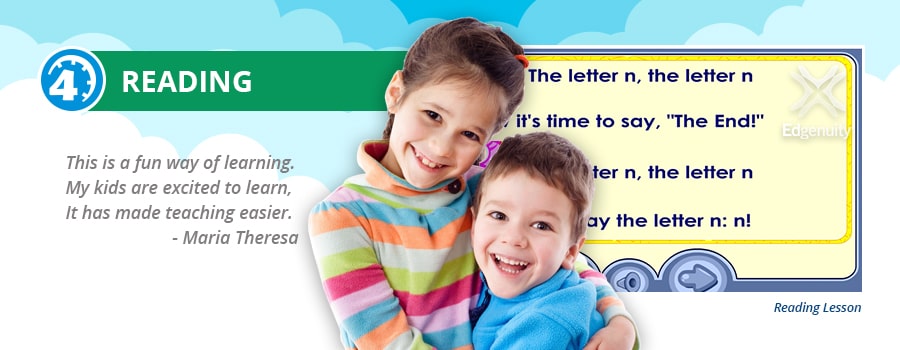
Learn to read with Time4Learning! Not all reading programs have the ability to take young learners down an individualized path toward reading proficiency. Time4learning’s homeschool reading curriculum from Edgenuity Odyssey® supports a variety of students—from those who pick up phonics and sight words with ease to those who need more reinforcement.
Grounded in an extensive base of research-based reading principles, Odyssey reading follows the best practices for literacy development and reading instruction. This includes the integration of listening, speaking, reading, and writing into the curriculum.
The most successful reading programs allow young readers and writers to expand their knowledge and appreciate the use of oral and written language to develop a love of reading and writing. Time4Learning’s standards-based program provides a strong foundation for emerging readers.
Individualized Reading Curriculum for Homeschool
When the responsibility for reading instruction falls to homeschool parents, they want to know that the curriculum they use will fit their child’s individual needs. Through engaging educational activities, cooperative exercises, project-based activities, real-world connections, self-paced personalized education, and stimulating audio, graphics, animation, and supplementary tools, Odyssey reading supports each child’s distinct learning style.
Homeschoolers need a reading program that not only provides step-by-step instruction, but also engages students with a fun, interactive teaching format. In an age of easy distractibility and multiple media types competing for a child’s attention, the ideal format for a reading homeschool curriculum would:
- Keep a student’s attention while offering high-quality educational value
- Allow a student to progress at his/her own pace
- Fit with a child’s preferred mode of learning (individual learning style)
The Steps to Reading Proficiency
Time4Learning aids in the reading process by providing a structured and sequential approach to learning to read. This allows students to build a strong foundation for continued growth and mastery of the needed reading skills throughout the school years. The development of successive proficiency in reading is sometimes likened to a pyramid.
The reading skills pyramid is a way to depict the pattern of acquisition that preschool and early elementary students go through when learning how to read. The five key areas of this pyramid of literacy development are:

See What Others are Saying…
By Alisha
“My 6 year old struggled with reading and the Phonics concept until now! Everything is “clicking” and she’s reading so well now!!!”
Reading Curriculum for Preschool
Preschool is a time when children are making direct connections between letters and sounds and between words and meanings. Reading to a child frequently during the toddler and preschool years has shown to have a correlation to their success when they begin to transition to reading for themselves.
To boost this process, Time4Learning has created an online preschool reading program that includes guided reading, reading worksheets, language arts games, and many other creative methods that make learning to read fun for your preschooler. Find out more about Time4Learning’s homeschool preschool reading curriculum.

Reading Curriculum for Elementary
By the time a child is entering kindergarten, he or she usually has the building blocks they need to begin learning to read. For homeschool parents, teaching a child to read means helping students use those blocks to move from letter recognition to phonetic awareness to building fluency, vocabulary, and comprehension. In the later elementary years, young readers will continue to master these skills while adding the ability to translate their thoughts into grammatically correct writing, to do beginning research to find answers to their questions, and to find themes in assigned literature.
Time4Learning supports elementary readers with an award-winning, standards-based language arts curriculum that aligns reading instruction with the other all-important aspects of language learning: vocabulary development, reading comprehension, composition, and literary elements.

Reading Curriculum for Middle School
Just because a student has had foundational instruction in reading throughout the elementary years, doesn’t mean that they’ve mastered all the fundamentals. Middle schoolers will be incorporating advanced reading and writing skills not only in their language arts program, but in every other academic subject. That’s why it continues to be important for junior high level readers to build literacy proficiency.
In the middle school years, Time4learning’s homeschool curriculum reinforces all the concepts learned in the elementary years with additional focus on more complex grammar rules, more in-depth literary analysis, and learning how to better organize their writing. The middle school language arts program includes over 800 lessons, activities, and extensions designed to prepare students for the rigors of high school level English courses.

Reading Curriculum for High School
In 2015, the National Assessment of Educational Progress reported that only 37% of eighth graders had a proficiency level in reading. That means that there is still plenty of work to be done in the high school years to prepare students for college and career, both which require a strong aptitude in reading.
At the secondary stage, the goal of Time4Learning’s high school language arts curriculum is to transform students into skilled, independent and successful readers and thinkers. It’s organized into four leveled English courses that include instruction in:
- Writing practice
- Reading comprehension
- Vocabulary development
- Literary analysis
- Communication skills
Why Time4Learning’s Homeschool Reading Program Works
We know that parents have many choices when it comes to children’s reading programs. To help you determine if Time4Learning is the best curriculum for your student, we’ve detailed some of the highlights, features, and benefits your student can get from his or her subscription.
Highlights
- High-quality, research-based instruction and engaging learning activities delivered in a variety of formats (animation, video, print, music, etc.)
- Thematic lessons that emphasize the connection between reading and writing
- Builds core educational fundamentals in a creative atmosphere
- Individualized and self-paced instruction that includes ongoing assessments
Features
- Balanced program that incorporates phonics instruction, sight-reading skills, and literature-based lessons
- Interactive, project-based activities
- Continuous, integrated assessment and instruction
- Lessons developed by experts and designed to meet or exceed state standards
- Supplementary printables for offline review and enrichment
Benefits
- Works for students with varying skill levels including gifted readers, traditional readers, and remedial readers
- Engages students and supports their critical-thinking and problem-solving skills
- Offers students immediate feedback and direction and allows parents to assess and monitor student progress at all times
- Helps students prepare for standardized achievement tests
- Extends and deepens student knowledge