

Seventh and Eighth Grade Social Studies with Time4Learning

Time4Learning presents a logical and sequential approach to teaching social studies. This approach ensures that children cover the material required by many state standards and that appropriate review is built in from grade to grade.

Seventh and eighth grade social studies are combined, with students rounding out their social studies curriculum with an in-depth study of American history from colonization to the Clinton administration.

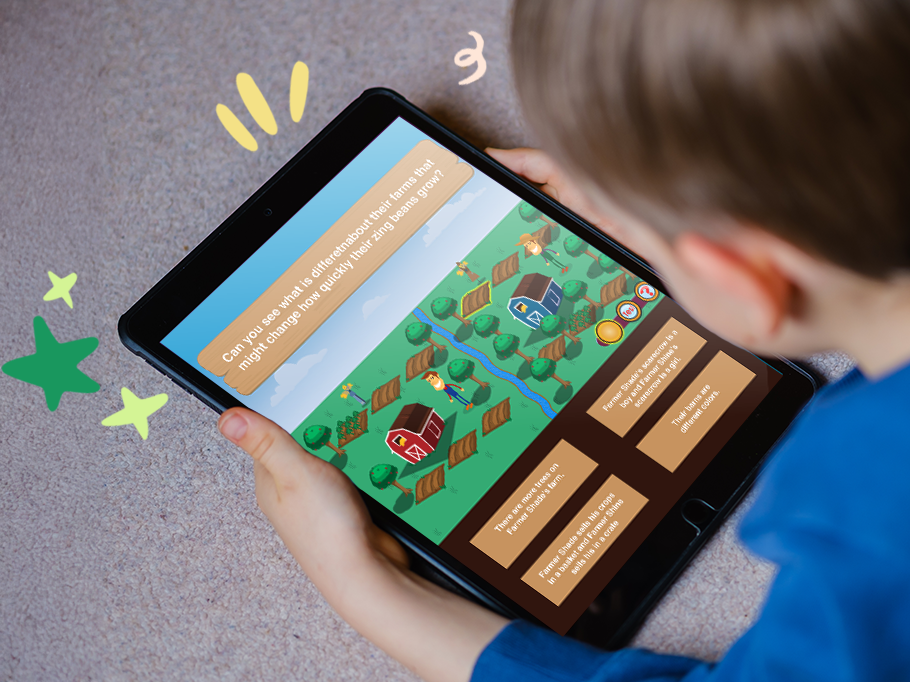
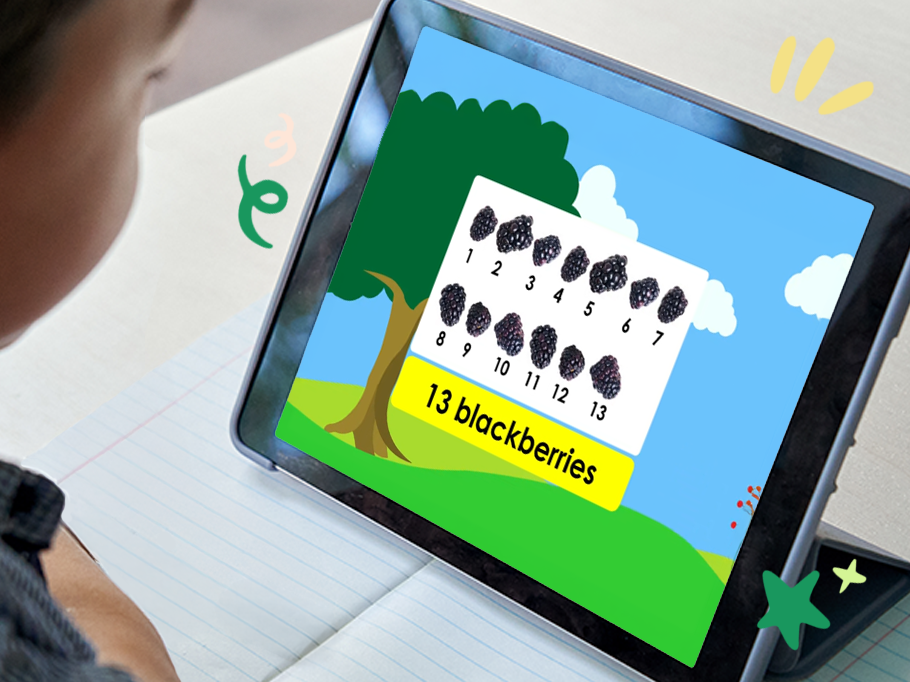
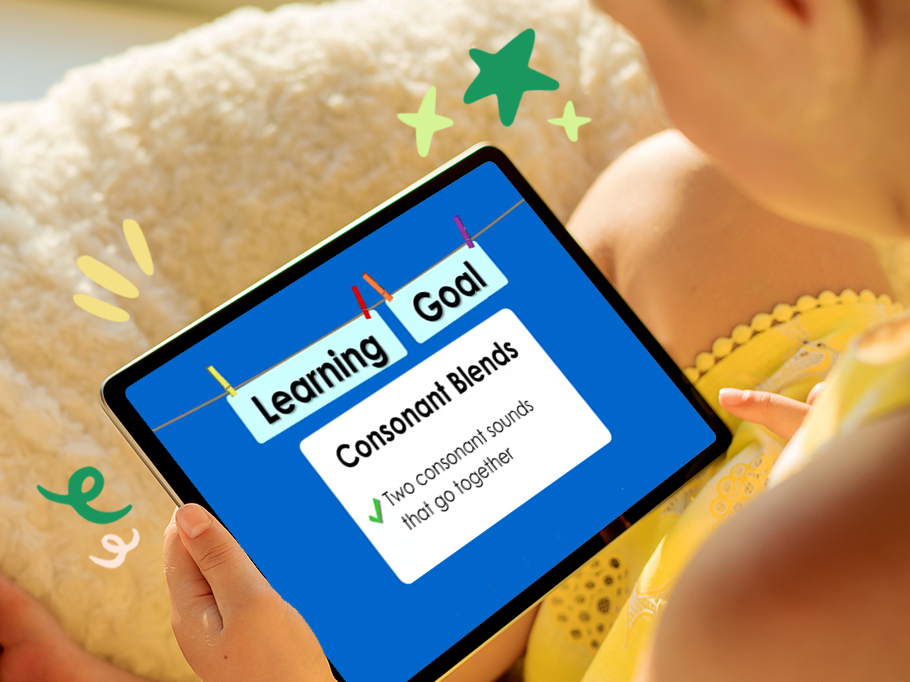
The Time4Learning program combines illustration, animation, real pictures, audio, text, video and embedded simulations in multimedia online lessons and activities.  It also combines math and writing skills in cross-curricular activities that are completed both on and offline.  There are 106 lessons in the social studies curriculum, including the following units of study:

  • The Age of Exploration
  • English Colonization
  • American Revolution Causes
  • The American Revolution
  • Creation of US Government
  • Early Years of the Republic
  • Age of Jefferson
  • Growth and Expansion
  • Jacksonian Democracy
  • Manifest Destiny
  • Reform Movements
  • Causes of the Civil War
  • The Civil War
  • Reconstruction
  • Immigration and Industry
  • United States as a World Power
  • World War I
  • Roaring Twenties
  • The Great Depression
  • World War II
  • The Cold War
  • Changing Times in America
  • Modern America

For a complete list of units and lessons, check out the Seventh and Eighth Grade Social Studies Lesson Plan page.  Or check out a demo lesson from this course.

DEMO LESSON: Liberty or Death Students will analyze the early calls for Independence by colonists and the early battles of the American Revolution.

Posted under Online Learning, grade levels, history, homeschool curriculum, seventh grade curriculum, social studies

This post was written by Kerry on August 21, 2009

Seventh Grade Language Arts with Time4Learning

A seventh grade language arts program should be taught using a system of seventh grade reading lesson plans including interactive activities, learning games, printable worksheets, assessments, and positive reinforcement. Guided reading is a vital part of a seventh grade language arts program.

And seventh grade language arts lessons should cover all English language arts strands. The major language arts strands for a seventh grade reading program are vocabulary development, reading comprehension, literature, writing strategies, writing applications, English language conventions, listening and speaking. While these language arts strands might surprise you, they are all critical lessons for a seventh grade reading program.

Seventh grade reading lesson plans, reading worksheets, and reading activities teach reading skills covering all the language arts strands. Seventh grade reading activities provide an opportunity for students to describe and connect essential ideas, arguments, and perspectives by using a knowledge of text structure, organization, and purpose. These students learn through guided reading, reading worksheets, language arts games, and many creative methods that make the seventh grade reading program fun for them.

A seventh grade reading program includes vocabulary and concept development. Reading skill develops as students continue to learn with grade level appropriate reading material. Seventh grade reading program students describe and connect essential ideas, arguments, and perspectives found in various texts by using a knowledge of text structure, organization, and purpose. They apply this knowledge to achieve fluent oral and silent, seventh grade guided reading skill.

For example, the seventh grade reading program requires students to apply their knowledge of word origins and word relationships, as well as historical and literary context clues, to determine the meaning of specialized vocabulary and to understand the precise meaning of grade level appropriate words. Language arts lesson plans help seventh grade reading skill students identify idioms, analogies, metaphors, and similes in prose and poetry.

The seventh grade reading level also requires them to use knowledge of Greek, Latin, and Anglo-Saxon roots and affixes to understand content-area vocabulary. In seventh grade students clarify word meanings through the use of definition, example, restatement, or contrast. When reading they should assess the adequacy, accuracy, and appropriateness of an author’s evidence to support claims and assertions, noting instances of bias and stereotyping.

A seventh grade reading program includes language arts lesson plans that help children learn about the structural features of informational materials. For example, they are expected to understand and analyze differences in structure and purpose between various categories of informational materials including textbooks, newspapers, instructional manuals, and signs. They learn to locate information by using a variety of consumer, workplace, and public documents, and analyze text that uses the cause-and-effect organizational pattern.

The seventh grade reading level is tested with reading skill comprehension strategies and analysis of reading skill level appropriate text. Seventh grade students identify and trace the development of an author’s argument, point of view, or perspective in text. After doing this, they will understand and explain the use of simple mechanical devices by following technical directions.

Seventh grade guided reading includes comprehension and analysis of reading level appropriate text. Seventh grade students learn to analyze a range of responses to a literary work and determine the extent to which the literary elements in the work shaped those responses. To strengthen seventh grade reading comprehension, students are asked to read and respond to historically or culturally significant works of literature that reflect and enhance their studies of history and social science. Seventh grade language arts lesson plans guide students to demonstrate reading skill by clarifying ideas and connecting them to other literary works. Seventh grade reading program students are expected to demonstrate the reading skill of literary response and structural feature analysis by articulating expressed purposes and characteristics of different forms of prose including short stories, novelas, and essays).

Another vital component of the seventh grade reading program is narrative analysis of reading skill appropriate text. Students identify events that advance the plot and determine how each event explains past or present action(s) or foreshadows future action(s). After guided reading, students are asked to analyze characterization as delineated through a character’s thoughts, words, speech patterns, and actions; the narrator’s description; and the thoughts, words, and actions of other characters. Also in a seventh grade reading program, students develop reading skill by identifying and analyzing recurring themes across works such as the value of bravery, loyalty, and friendship, or the effects of loneliness. Language arts lesson plans for seventh grade students help them contrast points of view, examining first and third person, limited and omniscient, and subjective and objective in narrative text, explaining how they affect the overall theme of the work.

Time4Learning teaches a comprehensive seventh grade language arts curriculum using fun, seventh grade reading activities to build a solid reading foundation. To find out more about the seventh grade language arts program at Time4Learning, try out one of the demo lessons, ask a question in our parents forum, or even view the entire seventh grade language arts scope and sequence. Sign up today to let your seventh grader experience the fun and learning encompassed in the Time4Learning Seventh Grade Language Arts Program.

Posted under grade levels, homeschool curriculum, language arts, middle school curriculum, online reading, reading curriculum, seventh grade curriculum

This post was written by Kerry on August 19, 2009

Seventh Grade Math with Time4Learning

A seventh grade math curriculum should be taught using seventh grade lessons including interactive activities, learning games, printable worksheets, assessments, and reinforcement. Manipulatives are very important for seventh grade math lessons.

And a seventh grade math curriculum should cover all the math strands, not just arithmetic. The major math strands for seventh grade curriculum are number sense and operations, algebra, geometry and spatial sense, measurement, and data analysis and probability. While these math strands might surprise you, they are all critical lessons for a seventh grade math curriculum.

Seventh grade math students build on what they learned in sixth grade math. In sixth grade math they worked with numbers through the hundred-thousands or more. During seventh grade math children learn about decimals, percents, exponents, scientific notation, ratios, and square roots. Seventh grade math opens them up to a greater understanding of measurement techniques, geometry and algebraic thinking. It will be a challenging year as they are presented with many new and complex concepts.

Seventh grade math students are expected to learn word names and standard numerals for integers, fractions, decimals, ratios, numbers expressed as percents, numbers with exponents, numbers expressed in scientific notation, and numbers expressed using the square root radical. They read and write whole numbers and decimals in expanded form, including exponential notation. Using seventh grade math curriculum, students compare and order integers, fractions, decimals, numbers with exponents, and numbers expressed as percents or in scientific notation.

Also seventh grade math students learn examples of rational and irrational numbers found in real-life situations including the irrational numbers Pi and the square root of 2. They describe the meanings of rational and irrational numbers using physical or graphical displays. Learning about relationships between fractions, decimals, and percents is another vital aspect of seventh grade math curriculum.

Seventh grade math students learn to express a given quantity in a variety of ways including integers, fractions, decimals, numbers expressed as a percent, numbers in scientific notation, and ratios. They express whole numbers in exponential notation and evaluate numerical expressions that contain exponential notation. They express numbers greater than one in scientific notation.

Seventh grade math lessons teach the effects of the four basic arithmetic operations on whole numbers, fractions, mixed numbers, and decimals. Students are taught to apply knowledge of the decimal number system and non-place-value systems. Seventh grade math students apply properties of rational numbers to solve problems, including commutative, associative, distributive, identity, equality, and inverse properties. They learn about the inverse relationship of positive and negative numbers.

Seventh grade math lessons give students real-world two and three-step problems to solve using decimals and fractions. Using percents, students solve real-world problems including discounts, simple interest, taxes, and tips. Seventh grade math students will be expected to apply the order of operations to solve problems using parenthesis, exponents, multiplication, division, addition and subtraction. They learn about proportional relationships using tables, graphs, and “constant ratio” relationships to solve and explain problems.

Seventh grade math students use whole numbers, fractions, or decimals to solve one or two-step real-world problems. They learn appropriate estimation techniques for solving problems using whole numbers or fractions. Estimates will be used to predict results and check the reasonableness of results. Students are asked to determine whether an exact answer is needed or if an estimate will do. Seventh grade math lessons teach students to know if numbers are prime or composite and to determine the prime factorization of composite numbers. Students find the greatest common factor and least common multiple of two or more numbers, apply number theory concepts to determine terms in a sequence, and use divisibility rules to solve real-world or mathematical problems.

Seventh grade math curriculum uses concrete and graphical models to show students how to create formulas for finding volumes and surface areas of solids including prisms and cylinders. The students solve and explain problems involving perimeter, area, circumference, and the surface area and volume of prisms and cylinders. Using a protractor, seventh grade math students find the measure of angles. They apply angle relationships including corresponding, complementary, supplementary, interior and exterior.

New concepts are taught during seventh grade math, including the development and use of the distance formula (d=rt). Given a two or three dimensional figure seventh grade math students create a new figure by increasing or decreasing original dimensions. The students are expected to know relationships between perimeters, areas, surface areas, and volumes of an original figure and those of a newly created figure. Using appropriate scales, seventh grade math students produce proportional drawings or models. They learn about proportional relationships used in scale drawings, and produce scale drawings.

Using customary or metric measuring units, seventh grade math students measure length, weight, mass, capacity and volume. Seventh grade math curriculum teaches them to know relationships between metric units of mass and capacity. Students find measures of length, weight, mass, capacity and volume using proportional relationships and properties of similar geometric figures. Units of measurement within a system (metric or customary) are compared. Students perform operations on measurements within each system.

Solving real-world problems, seventh grade math students select an appropriate unit of measurement and do conversions within the metric or customary measurement systems. They are expected to understand that measurements are always approximate and that the degree of accuracy depends on the precision of a measuring device. Seventh grade math lessons encourage students to select appropriate measuring tools such as scales, rulers, thermometers, measuring cups, protractors, or gauges.

Time4Learning is an online learning system for homeschool education, enrichment, e-tutoring, or for sharpening summer skills. We provide seventh grade math worksheets and seventh grade math games in a total curriculum. Each unit has multimedia lessons, interactive exercises, printable worksheets for reinforcement, and assessments. Click to see the details on Time4Learning’s online seventh grade math lesson plan.

There are 339 math activities in the seventh grade curriculum, and children can either move through them sequentially, or pick and choose from the lessons, using the Activity Finder. Parents can easily follow their child’s progress by logging into the child’s portfolio and viewing day by day lessons or a customizable and printable report than can be sorted by subject, lesson type, or date range.

To find out more about the seventh grade math program at Time4Learning, try out one of the demo lessons, ask a question in our parents forum, or even view the entire seventh grade math scope and sequence. Sign up today to let your seventh grader experience the fun and learning encompassed in the Time4Learning Seventh Grade Math Program.

Posted under Homeschool, Online Learning, grade levels, homeschool curriculum, math curriculum, online math curriculum, seventh grade curriculum

This post was written by Kerry on August 17, 2009

Sixth Grade Science and Social Studies with Time4Learning

Time4Learning presents a logical and sequential approach to teaching science and social studies.

Sixth grade students are immersed in the scientific process. Sixth graders learn about the properties of matter, characteristics of plants, energy, force and motion, and electricity and magnetism.  These units will cover such subjects as collecting and displaying data, different states of matter, stimulus and response in plants, six forms of energy, electricity from magnetism, and phases of the moon.  See the sixth grade science curriculum for more information.

In social studies, sixth grade students continue the study of ancient civilizations, this time covering India, China, Rome and Islam in history. In geography, Africa and westward migration in the US are studied. Students will also begin state studies of their own states. Individual lessons cover such things as contributions of India, the Han dynasty, Origins of Christianity, the Arabian Peninsula, West African civilization, Settler and Native American wars, Growth of American Cities, The Spanish-American War, and Presidential Elections.  See the sixth grade social studies curriculum for more information.

There are 73 lessons in the Time4Learning sixth grade science curriculum, and 110 in the social studies curriculum.  The Time4Learning program combines illustration, animation, real pictures, audio, text, video and embedded simulations in multimedia online lessons and activities.  It also combines math and writing skills in cross-curricular activities that are completed both on and offline.

To find out more about the Sixth Grade science or social studies program at Time4Learning, try out one of the demo lessons, ask a question in our parents forum, or even view the entire Sixth Grade Scope and Sequence. Sign up today to let your Sixth Grader experience the fun and learning encompassed in the Time4Learning Sixth Grade Science and Social Studies Program.


See the sixth grade social studies curriculum for more information.

Posted under Homeschool, Online Learning, grade levels, homeschool curriculum, science, sixth grade curriculum, social studies

This post was written by Kerry on August 14, 2009

Sixth Grade Language Arts with Time4Learning

A sixth grade reading program should be taught using a system of sixth grade reading lesson plans including interactive activities, learning games, printable worksheets, assessments, and positive reinforcement. Guided reading is a vital part of a sixth grade reading program.

And sixth grade language arts lessons should cover all English language arts strands. The major language arts strands for a sixth grade reading program are vocabulary development, reading comprehension, literature, writing strategies, writing applications, English language conventions, listening and speaking. While these language arts strands might surprise you, they are all critical lessons for a sixth grade reading program.

Sixth grade reading activities provide an opportunity for students to describe and connect essential ideas, arguments, and perspectives by using their knowledge of text structure, organization, and purpose. Students learn through guided reading, reading worksheets, language arts games, and many creative methods that make the sixth grade reading program fun for them.

A sixth grade language arts program includes vocabulary and concept development. Reading skill develops as students continue to learn using grade level appropriate reading material. Sixth grade reading program students describe and connect essential ideas, arguments, and perspectives by using their knowledge of text structure, organization, and purpose. They apply this knowledge to achieve fluent oral and silent sixth grade guided reading skills.

For example, the sixth grade reading program requires students to apply knowledge of word origins and word relationships, as well as historical and literary context clues, to determine the meaning of specialized vocabulary and to understand the precise meaning of grade level appropriate words. Language arts lesson plans help sixth grade reading skill students read narrative and expository text fluently and accurately and with appropriate pacing, intonation, and expression. Their reading level also requires them to identify and interpret figurative language and words with multiple meanings.

In sixth grade students recognize the origins and meanings of frequently used foreign words in English, and use these words accurately in speaking and writing. They should monitor expository text for unknown words or words with novel meanings by using word, sentence, and paragraph clues to determine meaning. Furthermore, a sixth grade reading program includes language arts lesson plans that help children understand and explain “shades of meaning” in related words, for example, “softly” and “quietly”.

The sixth grade reading level is tested with reading skill comprehension strategies.  They analyze text that uses the compare-and-contrast organizational pattern. Sixth grade guided reading includes comprehension and analysis of reading level appropriate text in order to connect and clarify main ideas by identifying their relationships to other sources and related topics. To strengthen comprehension, sixth grade reading program students are asked to clarify an understanding of texts by creating outlines, logical notes, summaries, or reports. Sixth grade language arts lesson plans require students to demonstrate reading skill by following multiple-step instructions for preparing applications (library card, bank savings account, sports club, and/or league membership). Also students in the sixth grade reading program are expected to make reasonable assertions about a text through accurate, supporting citations. In doing this they are instructed to note instances of unsupported inferences, fallacious reasoning, persuasion, and propaganda in text.

Another vital component of the sixth grade language arts program is literary response and analysis of reading skill appropriate text. Students read and respond to historically or culturally significant works of literature that reflect and enhance their studies of history and social science. Also in the sixth grade reading program, students develop reading skill by analyzing the effect of character qualities such as courage or cowardice, ambition or laziness, on plot and conflict resolution. They also analyze the influence of setting on the problem and its resolution. Language arts lesson plans for sixth grade students help them define how tone or meaning is conveyed in poetry through word choice, figurative language, sentence structure, line length, punctuation, rhythm, repetition, and rhyme. Via guided reading, sixth grade students learn about point of view, identifying the main speaker and recognizing the difference between first-and third-person narration, not only in fiction but also in biographies and autobiographies. Another reading skill introduced in sixth grade is to identify and analyze features of themes conveyed through characters, actions, and images.

Time4Learning teaches a comprehensive sixth grade language arts curriculum using fun, sixth grade reading activities to build a solid reading foundation. To find out more about the sixth grade language arts program at Time4Learning, try out one of the demo lessons, ask a question in our parents forum, or even view the entire sixth grade language arts scope and sequence. Sign up today to let your sixth grader experience the fun and learning encompassed in the Time4Learning Sixth Grade Language Arts Program.

Posted under Homeschool, Online Learning, grade levels, homeschool curriculum, language arts, learning to read, middle school curriculum, online reading, reading curriculum, sixth grade curriculum

This post was written by Kerry on August 12, 2009

Sixth Grade Math with Time4Learning

A sixth grade math curriculum should be taught using sixth grade lessons including interactive activities, learning games, printable worksheets, assessments, and reinforcement. Manipulatives are very important for sixth grade math lessons.

And a sixth grade math curriculum should cover all the math strands, not just arithmetic. The major math strands for sixth grade curriculum are number sense and operations, algebra, geometry and spatial sense, measurement, and data analysis and probability. While these math strands might surprise you, they are all critical lessons for a sixth grade math curriculum.

Sixth grade math students build on what they learned in fifth grade math, which led them to the decimal base-10 number system, finding factors of numbers to 100, and multiplication of decimals to hundredths. In sixth grade math they work with numbers through the hundred thousands or more. They compare decimals to fractions, and add, subtract, multiply and divide decimals and fractions. Sixth grade math opens them up to a greater understanding of measurement techniques, geometry and algebraic thinking. It will be an exciting year full of new, complex math concepts.

During sixth grade, math students demonstrate a knowledge of word names and standard numerals for whole numbers, fractions, decimals through hundred-thousands, and percents. They read and write whole numbers and decimals in expanded form. Using graphic models, number lines and symbols they compare and order fractions, decimals, and common percents.

A sixth grade math student will be able to describe the meanings of positive rational numbers, will understand the relationships between fractions, decimals, and percents, and will be able to express quantities in various ways using fractions, decimals, and percents. Sixth grade math students learn about the inverse relationship of positive and negative numbers. Also during sixth grade math, students are expected to use all four basic arithmetic operations on whole numbers, fractions, mixed numbers, and decimals. They should be able to select the right operations and solve real-life problems with one and two step solutions.

Sixth grade math students learn to compare the decimal number system to systems that don’t use place value such as Roman or Egyptian number systems. They are trained to apply commutative, associative and distributive properties in the addition and multiplication of rational numbers. Sixth grade math students also learn about the order of operations used when solving problems - for example, operations inside parenthesis are computed first.

A component of sixth grade math is to know about proportional relationships and to be able to describe them. Students should be able to justify their choice of methods used for calculations. They should estimate to predict results and check the reasonableness of results. Sixth grade math students should know if numbers are prime or composite. They should use divisibility rules, determine prime factorization of numbers less than or equal to 100, and should be able to find the greatest common factor and least common multiple of two or more numbers.

Time4Learning is an online learning system for homeschool education, enrichment, e-tutoring, or for sharpening summer skills. We provide sixth grade math worksheets and sixth grade math games in a total curriculum. Each unit has multimedia lessons, interactive exercises, printable worksheets for reinforcement, and assessments. Click to see the details on Time4Learning’s online sixth grade math lesson plan.

There are 302 math activities in the sixth grade curriculum, and children can either move through them sequentially, or pick and choose from the lessons, using the Activity Finder. Parents can easily follow their child’s progress by logging into the child’s portfolio and viewing day by day lessons or a customizable and printable report than can be sorted by subject, lesson type, or date range.

To find out more about the sixth grade math program at Time4Learning, try out one of the demo lessons, ask a question in our parents forum, or even view the entire sixth grade math scope and sequence. Sign up today to let your sixth grader experience the fun and learning encompassed in the Time4Learning Sixth Grade Math Program.

Posted under Homeschool, grade levels, homeschool curriculum, math, math curriculum, middle school curriculum, online math curriculum, sixth grade curriculum

This post was written by Kerry on August 11, 2009

Fifth Grade Science and Social Studies with Time4Learning

Time4Learning presents a logical and sequential approach to teaching science and social studies.

Electricity, light and organisms are introduced in the fifth grade science curriculum, while studies continue in scientific investigation, classification of living things and lifecycles and reproduction. Weather is looked at indepth in the fifth grade science lessons as well.  These units will cover subjects such as: Timeline of Scientific Events, the Periodic Table, Structure of Circuits, Reflections and Refractions of Light, Life Cycle of a Plant, and Meteorology. Complete details are in the fifth grade lesson plans.

Early civilizations ranging from the Olmecs to the Phoenicians are the focus of fifth grade history, along with 19th century United States history, including the events leading up to the Civil War, the war itself, and post-war reconstruction. Economics, US and world geography, and government systems round out the fifth grade social studies curriculum. Individual lessons cover such things as: Phoenician Civilization, The Golden Age of China, Greek Civilization, Lewis & Clark Expedition, and Time Zones Around the World.  Complete details are in fifth grade social studies lesson plans.

There are 143 lessons in the Time4Learning fifth grade science curriculum, and 286 in the social studies curriculum.  The Time4Learning program combines illustration, animation, real pictures, audio, text, video and embedded simulations in multimedia online lessons and activities.  It also combines math and writing skills in cross-curricular activities that are completed both on and offline.

To find out more about the Fifth Grade science or social studies program at Time4Learning, try out one of the demo lessons, ask a question in our parents forum, or even view the entire Fifth Grade Scope and Sequence. Sign up today to let your Fifth Grader experience the fun and learning encompassed in the Time4Learning Fifth Grade Science and Social Studies Program

Posted under Homeschool, Online Learning, elementary homeschool curriculum, fifth grade curriculum, grade levels, homeschool curriculum, science, social studies

This post was written by Kerry on August 7, 2009

Fifth Grade Language Arts with Time4Learning

A fifth grade reading program should be taught using a system of fifth grade reading lesson plans including interactive activities, learning games, printable worksheets, assessments, and positive reinforcement. Guided reading is a vital part of a fifth grade reading program.

And fifth grade language arts lessons should cover all English language arts strands. The major language arts strands for a fifth grade reading program are vocabulary development, reading comprehension, literature, writing strategies, writing applications, English language conventions, listening and speaking. While these language arts strands might surprise you, they are all critical lessons for a fifth grade reading program.

Fifth grade reading lesson plans, reading worksheets, and reading activities teach reading skills covering all the language arts strands. Fifth grade reading activities provide an opportunity for children to describe and connect essential ideas, arguments, and perspectives by using their knowledge of text structure, organization, and purpose. Fifth grade reading program students learn through guided reading, reading worksheets, language arts games, and many creative methods that make the fifth grade reading program fun for them.

A fifth grade reading program includes vocabulary and concept development and word recognition. Reading skill develops as fifth grade reading program students describe and connect essential ideas, arguments, and perspectives by using their knowledge of text structure, organization, and purpose. They apply this knowledge to achieve fluent oral and silent, fifth grade guided reading skill. For example, the fifth grade reading program requires students to apply knowledge of word origins and word relationships, as well as historical and literary context clues, to determine the meaning of specialized vocabulary.

Language arts lesson plans help fifth grade reading skill students use word origins to determine the meaning of unknown words, with the help of the reading teacher. Their reading level enables them to read narrative and expository text aloud, fluently and accurately, and with appropriate pacing, intonation, and expression. Students begin to understand and explain frequently used synonyms, antonyms, and homographs. They should know abstract, derived roots and affixes from Greek and Latin, which will help them analyze the meaning of complex words. A fifth grade reading program includes language arts lesson plans that help children understand and explain the figurative and metaphorical use of words in context.

The fifth grade reading level is improved using reading skill comprehension strategies. Students learn how text features such as format, graphics, sequence, diagrams, illustrations, charts, and maps make information accessible and usable. Fifth grade guided reading includes developing the ability to analyze text that is organized in sequential or chronological order. To strengthen comprehension, fifth grade reading program students learn to discern main ideas and concepts presented in texts, identifying and assessing evidence that supports those ideas.

Fifth grade language arts lesson plans require students to demonstrate reading skill by drawing inferences, conclusions, or generalizations, supporting them with textual evidence and prior knowledge. Fifth grade reading program students are expected to distinguish facts, supported inferences, and opinions in text. Also students in the fifth grade reading program read and respond to historically or culturally significant works of literature. They begin to find ways to clarify ideas and make connections between literary works. Through their fifth grade guided reading they identify and analyze the characteristics of poetry, drama, fiction, and nonfiction, and explain the appropriateness of the literary forms chosen by an author for each specific purpose.

Another vital component of the fifth grade reading program is narrative analysis of reading skill appropriate text. After guided reading, students are asked to identify the main problem or conflict of the plot and explain how it is resolved. They will contrast actions and motives such as loyalty, selfishness, conscientiousness. They will also notice the appearances of characters in a work of fiction and discuss the importance of the contrasts to the plot or theme. Also in fifth grade, students develop reading skill by describing the function and effect of common literary devices (e.g., imagery, metaphor, symbolism).

Language arts lesson plans for fifth grade students help them understand that theme refers to the meaning or moral of a selection. They learn to recognize themes (whether implied or stated directly) in sample works. Via guided reading, fifth grade students evaluate the meaning of archetypal patterns and symbols that are found in myth and tradition by using literature from different eras and cultures. Their fifth grade reading program also uses language arts lesson plans that help children evaluate the author’s use of various techniques such as the appeal of characters in a picture book, logic and credibility of plots and settings, and use of figurative language to influence readers’ perspectives.

Time4Learning teaches a comprehensive fifth grade reading curriculum using fun, fifth grade reading activities to build a solid reading foundation. To find out more about the fifth grade language arts program at Time4Learning, try out one of the demo lessons, ask a question in our parents forum, or even view the entire fifth grade language arts scope and sequence. Sign up today to let your fifth grader experience the fun and learning encompassed in the Time4Learning Fifth Grade Language Arts Program.

Posted under Homeschool, Online Learning, elementary homeschool curriculum, fifth grade curriculum, grade levels, homeschool curriculum, language arts, learning to read, online reading, reading curriculum

This post was written by Kerry on August 6, 2009

Fifth Grade Math with Time4Learning

During fifth grade, math students master the concepts and mechanics of multiplication and division including the commutative, associative and distributive properties. They are expected to learn to factor and recognize prime numbers to 100 and recognize squares. Fifth grade math students are taught to find factors of numbers including the rules of divisibility and to determine if they are prime or composite. They express whole numbers as products of prime factors and determine the greatest common factor or the least common multiple of two numbers up to 100 or more. In fifth grade they multiply by powers of 10, demonstrating patterns. They identify and apply rules of divisibility for 2, 3, 4, 5, 6, 9, and 10, and use models to identify perfect squares to 144.

In fifth grade math students are expected to explain and demonstrate multiplication of common fractions relating that to division. They use problem-solving strategies to determine operations needed to solve one- and two-step problems involving addition, subtraction, and multiplication of fractions. They explain and demonstrate multiplication of decimals to hundredths. They solve real-world problems using strategies to determine operations needed.

During fifth grade, math students are expected to explain and demonstrate multiplication of common fractions relating that to division. They use problem-solving strategies to determine operations needed to solve one- and two-step problems involving addition, subtraction, and multiplication of fractions. They explain and demonstrate multiplication of decimals to hundredths. They solve real-world problems using strategies to determine operations needed, and solve one- and two-step problems involving addition, subtraction, and multiplication of decimals.

In fifth grade math students predict the relative size of solutions in addition, subtraction, multiplication, and division of whole numbers, addition, subtraction, and multiplication of fractions, decimals, and mixed numbers. They are asked to give particular attention to fraction and decimal multiplication. They learn that when two numbers less than one are multiplied, the result is a number less than either factor. They learn to choose, describe, and explain estimation strategies used to determine reasonableness of solutions to real-world problems. Also fifth grade students estimate quantities of objects to 1000 or more, justifying and explaining the reasoning for their estimates.

Fifth graders also measure time, including centuries and seconds. They use schedules, calendars, and elapsed time to solve real-world problems. They estimate measurement of time up to the nearest one-minute interval. They compare temperature changes within the same scale using either a Fahrenheit or a Celsius thermometer and estimate measurement of temperature to the nearest five-degree interval. Fifth grade math students classify angle measures as acute, obtuse, right, or straight. They solve real-world problems involving the measurement of angles including estimations for acute, obtuse and straight angles. Also during fifth grade math students work with money, estimating amounts to the nearest dollar.

Time4Learning is an online learning system for homeschool education, enrichment, e-tutoring, or for sharpening summer skills. We provide fifth grade math worksheets and fifth grade math games in a total curriculum. Each unit has multimedia lessons, interactive exercises, printable worksheets for reinforcement, and assessments. Click to see the details on Time4Learning’s online fifth grade math lesson plan.

There are 196 math activities in the fifth grade curriculum, and children can either move through them sequentially, or pick and choose from the lessons, using the Activity Finder. Parents can easily follow their child’s progress by logging into the child’s portfolio and viewing day by day lessons or a customizable and printable report than can be sorted by subject, lesson type, or date range.

To find out more about the fifth grade math program at Time4Learning, try out one of the demo lessons, ask a question in our parents forum, or even view the entire fifth grade math scope and sequence. Sign up today to let your fifth grader experience the fun and learning encompassed in the Time4Learning Fifth Grade Math Program.

Posted under Homeschool, fifth grade curriculum, grade levels, homeschool curriculum, math curriculum, online math curriculum

This post was written by Kerry on August 4, 2009

Fourth Grade Science and Social Studies with Time4Learning

Time4Learning presents a logical and sequential approach to teaching science and social studies

In the fourth grade science lessons, scientific investigation skills are further developed, along with changes in matter and energy. Science lessons introduce sound and the solar system, while work on living things continues.  These units will cover subjects such as: simple experiments, heat as energy, sounds of music, composition of rocks, naming of planets, body systems, and recycling. Complete details are in the fourth grade science lesson plans.

In fourth grade, ancient civilizations, the Incas, Mayas and Aztecs and the American Revolutionary war period are studied in the social studies curriculum. Geography lesson focus on land formations and how people interact with their physical environment. United States civics are introduced. Individual lessons cover subjects such as: Egyptian culture, Mayan science, the causes of the French and Indian war, longitude and latitude, the constitution, and the role of economics in today’s society. Complete details are in the fourth grade social studies lesson plans.

There are 115 science lessons and 137 social studies lessons included in the curriculum for fourth grade at Time4Learning. The Time4Learning program combines illustration, animation, real pictures, audio, text, video and embedded simulations in multimedia online lessons and activities.  It also combines math and writing skills in cross-curricular activities that are completed both on and offline.

To find out more about the Fourth Grade science or social studies program at Time4Learning, try out one of the demo lessons, ask a question in our parents forum, or even view the entire Fourth Grade Scope and Sequence. Sign up today to let your Fourth Grader experience the fun and learning encompassed in the Time4Learning Fourth Grade Science and Social Studies Program.

Posted under Online Learning, elementary homeschool curriculum, fourth grade curriculum, grade levels, homeschool curriculum, science, social studies

This post was written by Kerry on July 31, 2009