Online Reading Comprehension Program
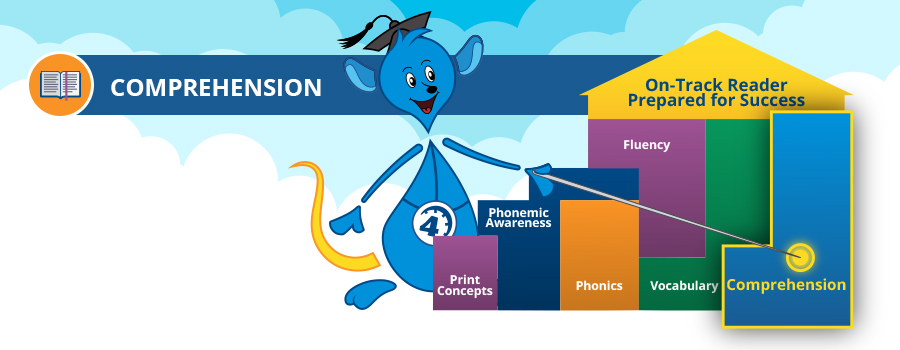
Reading comprehension is one of the pillars of good reading. Just as a building needs a strong foundation, a reader needs five specific pillars of reading skills to support his or her success. The five pillars of the reading skills pyramid are:
Once a reader starts interacting with text (awareness and decoding), he or she will move to reading for understanding (comprehension). Effective reading comprehension programs teach young readers how to do more than decode. They use interactive tools that engage and challenge them, laying a solid foundation for building reading comprehension.
What Is Reading Comprehension?
Reading comprehension is being able to accurately read text, decode it, and understand the meaning. In other words, it means how well you understand what you are reading. It is what separates the “passive,” unskilled reader from the “active” reader. Skilled readers don’t just read, they interact with the text. To help a beginning reader understand this concept, you might explain that interactive reading comprehension involves the internal discussion the reader has with himself/herself while reading.
Skilled readers, for instance:
- Predict what will happen next in a story using clues presented in text
- Create questions about the main idea, message, or plot of the text
- Monitor understanding of the sequence, context, or characters
- Clarify parts of the text which have confused them
- Connect the events in the text to prior knowledge or experience
How to Improve Reading Comprehension Skills
When parents are searching for online reading comprehension programs, they should focus heavily on those that build skills incrementally. Much like learning to drive, reading comprehension is taught piece by piece until the skill becomes automatic. The key to teaching reading comprehension is developing the habit of “interacting” with the text and monitoring one’s understanding while reading.
By “learning to read”, most parents mean that the child is decoding words. But understanding what you read—”reading comprehension”—requires that a student understand how to decode words and how to:
- Make sense of new vocabulary in context
- Use prediction to anticipate what’s coming next in a piece of writing
- Ask questions that bring better understanding to the text
- Visualize what’s happening or what’s being conveyed
- Re-read sections that are confusing
- Summarize what they have just read
These skills can begin to be taught even before children begin reading for themselves. Parents and early teachers can initiate the process of reading comprehension while reading to them and asking them questions about what they’re hearing.
Reading Comprehension Curriculum
Reading comprehension skills development is an integral part of a complete language arts program. With Time4Learning, these reading comprehension skills are taught and reinforced in a number of ways. Our reading comprehension lessons guide students toward:
- Explaining how to using the title of a piece to build ideas about what the focus of the text will be
- Using prior knowledge of a subject to enhance comprehension
- Confirming, modifying, or refining their predictions as they begin to read
- Distinguishing the main idea in a paragraph or essay from the supporting details
- Noting any confusing vocabulary and making assumptions about their meaning
- Recognizing when they are not adequately comprehending what they are reading
- Returning to any problematic passages to gain further understanding
Time4Learning offers online reading comprehension exercises that help students understand the strategy used by skilled readers to approach, read, and interpret text. The software introduces a theme by having an interactive and animated exercise teach the vocabulary and subject matter. Then the comprehension software will present a story. For younger students, the passage is read to them as they follow along with the text. This approach works both for families who need supplemental reading support for a struggling student or simply need a solid homeschool reading comprehension curriculum.